
 Save
Save
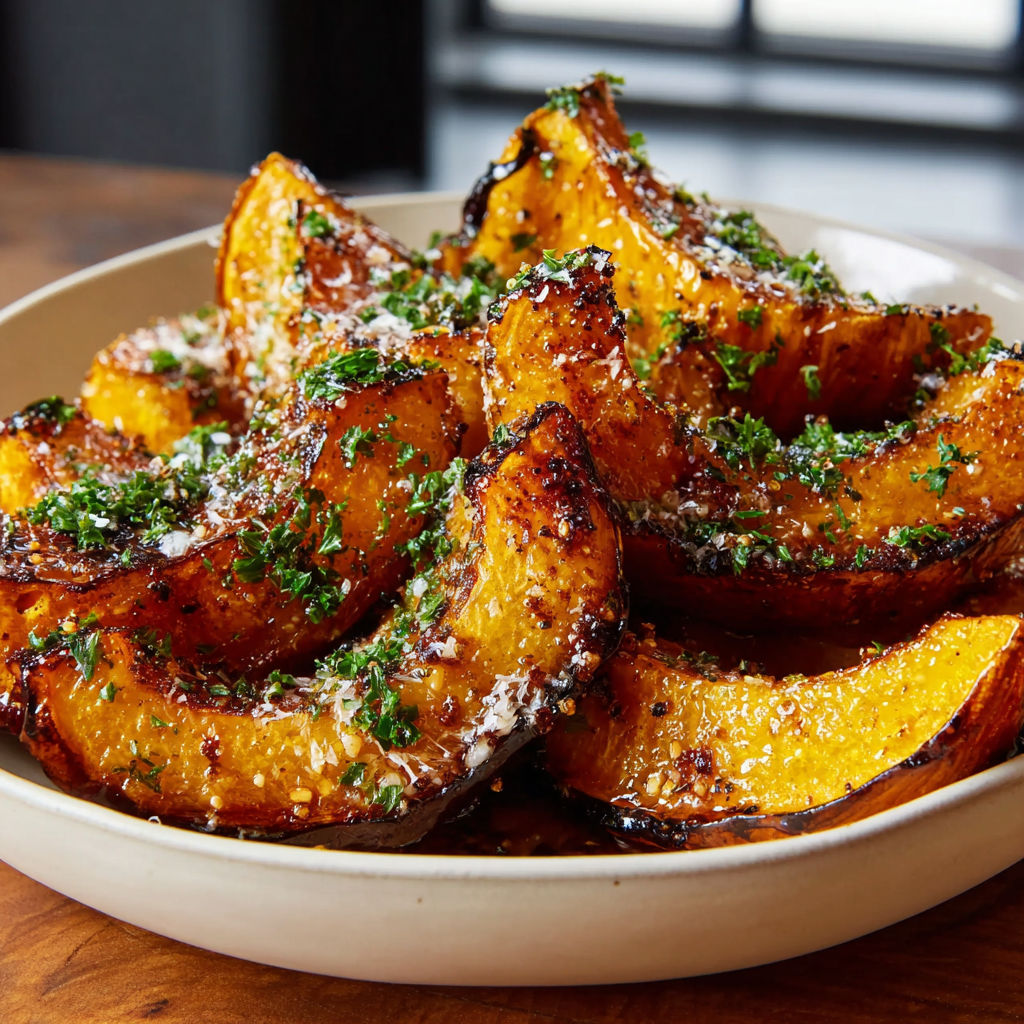
This roasted winter squash recipe transforms humble wedges into an irresistible side that feels like autumn on a platter. Every bite brings caramelized sweetness, crisp golden edges, and just enough savory goodness from Parmesan and fresh herbs. Whether you are tackling acorn, delicata, or buttercup squash, this simple roasting method keeps the squash tender—not mushy—and deeply flavorful.
I first tested this recipe for Thanksgiving and even my picky uncle asked for seconds. Now it is one of those comforting sides I crave as soon as cold weather arrives.
Ingredients
- Winter squash like acorn, buttercup, or delicata: Chosen for sweet, dense flesh. Pick squash that feels heavy for its size with matte, unblemished skin
- Olive oil: Helps the squash brown and adds richness. Look for extra virgin for best flavor
- Maple syrup or honey: Adds depth of sweetness and helps with browning. Use pure maple syrup if you can
- Salt: Brings out the natural squash flavor. Use flaky sea salt or kosher salt for best results
- Black pepper: Gives gentle heat and balance. Freshly cracked is highly recommended
- Parmesan cheese: Adds a nutty, savory finish. Grate fresh for the best texture and taste
- Fresh parsley: Delivers brightness and color. Choose vibrant green leaves without wilting
Instructions
- Prep the Squash:
- Preheat your oven to 425 degrees Fahrenheit or 220 degrees Celsius. With a large sharp knife, slice the squash in half lengthwise. Scoop out all seeds and stringy fibers using a sturdy spoon so each wedge is clean and ready for roasting. Cut each half into one inch thick wedges. If using acorn or buttercup squash, you can peel them for a smoother bite, although it is optional. For delicata squash, the skin is tender and edible, so there is no need to peel.
- Coat the Squash:
- Place the wedges into a large mixing bowl. Drizzle with olive oil and maple syrup. Season with salt and black pepper. Toss thoroughly using your hands or a spatula to ensure every piece is coated on all sides. This even mixing is critical for creating a flavorful caramelized exterior and a tender moist inside.
- Arrange on Baking Sheet:
- Lay the wedges on a large rimmed baking sheet in a single layer, giving each piece space so air can circulate. If the pieces touch or overlap, they will steam, not roast. You may need to divide them between two pans to avoid crowding.
- Roast the Squash:
- Slide the pan into the preheated oven. Roast for twenty minutes. Halfway through, use a sturdy spatula or tongs to flip each wedge so both sides brown evenly. Continue roasting for an additional ten to fifteen minutes until the squash is fork tender, deeply golden, and sticky with glaze especially around the edges.
- Finish and Serve:
- Transfer the hot roasted squash to a serving dish. Immediately sprinkle over the finely grated Parmesan and chopped parsley while the squash is still warm so the cheese begins to melt into the glaze. Serve right away and enjoy the mixture of sweet, sticky, savory, and herbaceous flavors.
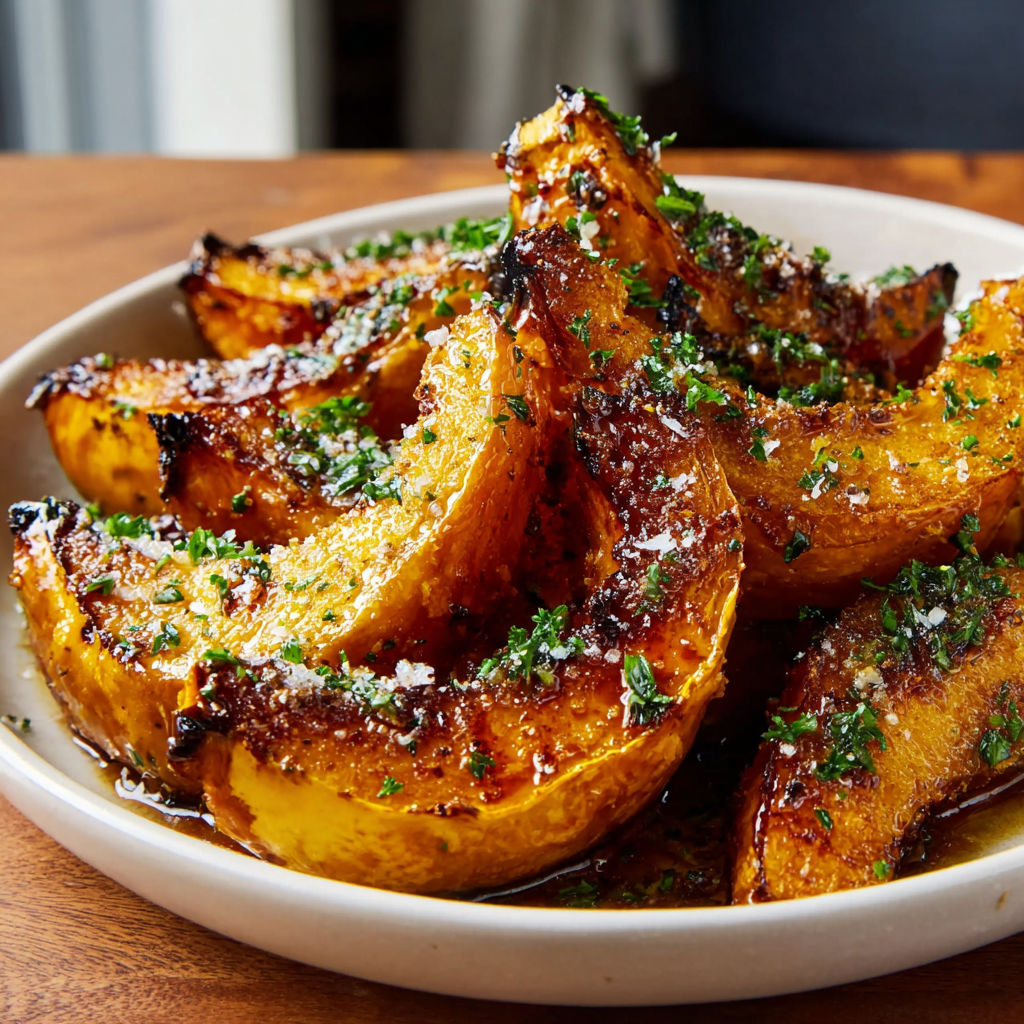
Parmesan is my not so secret favorite here. The moment it hits the hot squash, it melts into the sticky maple glaze and takes the whole dish somewhere special. When my family gathers for fall dinners, someone always sneaks the crispiest wedge from the pan before it hits the table.
Storage Tips
Store leftovers in an airtight container in the fridge up to three days. To reheat, use a hot oven or toaster oven instead of the microwave. This keeps the edges crisp and prevents the squash from turning soggy.
Ingredient Substitutions
Swap maple syrup for honey if needed. Both provide sweetness and help the edges caramelize. Vegan cheese or nutritional yeast works if you want to keep this dairy free. For fresh herbs, you can use chives, cilantro, or even a little sage for an autumnal touch.
Serving Suggestions
These golden wedges are delicious next to roast chicken or pork and make a beautiful addition to holiday spreads. They pair well with grain bowls, hearty salads, and even as a meatless main over farro or wild rice.
Cultural and Seasonal Context
Roasted squash is a staple in American fall and winter cooking with roots in indigenous traditions using native squash varieties. The blend of sweet, savory, and herbal notes hearkens to classic harvest season flavors.
Seasonal Adaptations
Try adding pumpkin seeds for crunch. Use butternut squash if other varieties are unavailable. Stir in a pinch of chili flakes for gentle heat.
Success Stories
Many readers tell me this is their new go to for potlucks and gatherings. Every time I bring a platter to a fall dinner it disappears fast. People love how the glaze and herbs complement the earthy squash notes.
Freezer Meal Conversion
Allow roasted wedges to cool fully, then freeze in a single layer on a baking sheet before transferring to a bag. To reheat, place back into a hot oven directly from frozen until hot and golden. This is a great make ahead option for busy weeks.
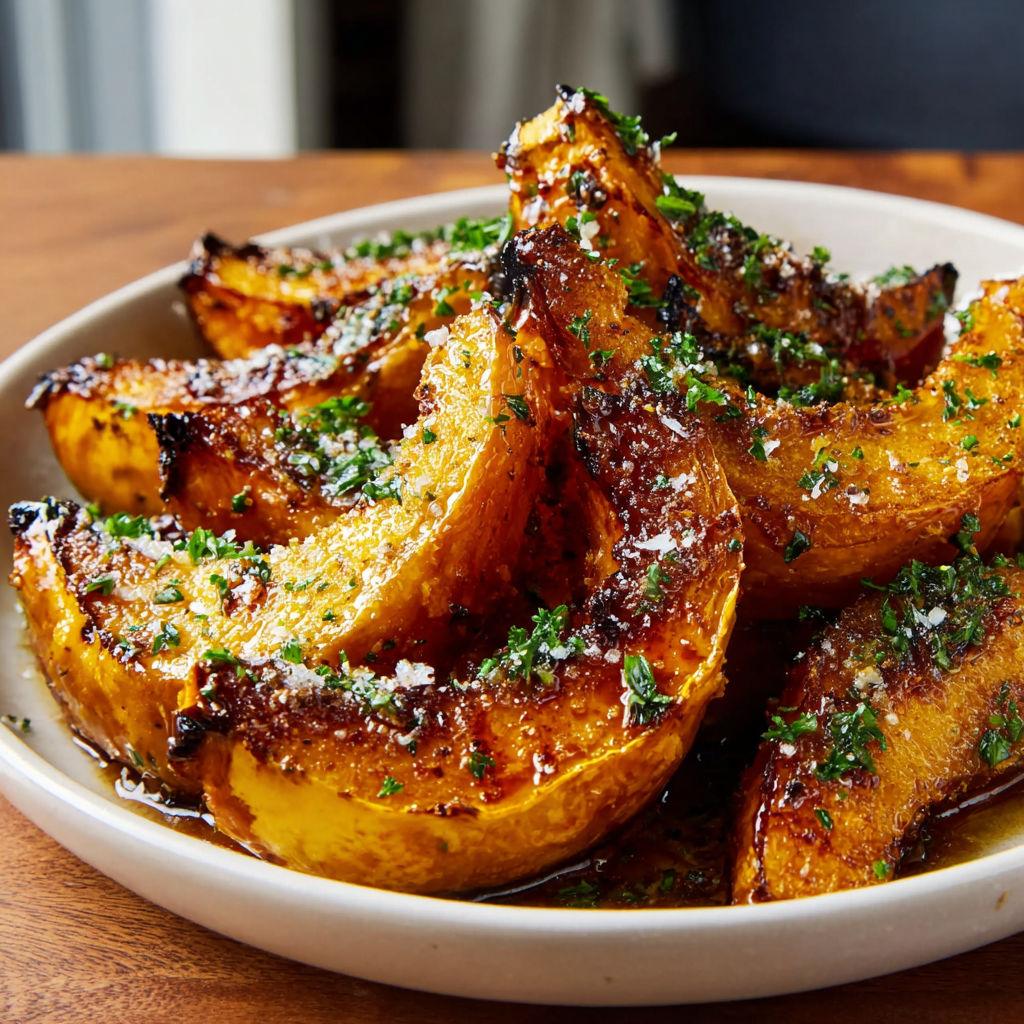
Once you taste these golden squash wedges, you will want them all through fall and winter. The perfect blend of sweet, savory, and crisp will make this recipe a new tradition at your table.
Common Recipe Questions
- → Which winter squash varieties work best?
Acorn, buttercup, and delicata are excellent choices. Delicata skins are edible, while acorn and buttercup are best if peeled for a softer texture.
- → How do I avoid mushy squash?
Arrange wedges in a single, uncrowded layer to ensure proper roasting and caramelization, not steaming. Using multiple baking sheets helps.
- → Can I substitute the maple syrup?
Yes, honey is a tasty alternative that also caramelizes nicely during roasting, adding a similar touch of sweetness.
- → What is the best way to slice squash?
Halve the squash lengthwise, remove seeds, and cut into 1-inch thick wedges for even cooking and browning.
- → When should I add Parmesan and parsley?
Sprinkle both immediately after roasting, while the squash is still hot, so the cheese melts slightly and the herbs stay fresh.