
 Save
Save
This cozy Korean style pot roast is a true centerpiece meal perfect for gathering everyone around the dinner table. The slow-braised beef turns melt-in-your-mouth tender with a savory spicy kick from gochujang balanced by caramelized onions and just enough sweetness. A steaming bowl of rice and a side of kimchi make every bite a little celebration.
I first made this on a rainy Sunday when I was craving the comfort of a stew with some extra personality. Now it is the dish friends beg for on chilly weekends especially when we want to enjoy something both hearty and lively.
Ingredients
- Beef chuck roast cut in large pieces for deep flavor and tenderness: Choose marbled pieces for best results
- Kosher salt: Enhances the beef and helps form a crust during searing Use a salt with granules not fine table salt
- Vegetable oil for searing: Goes for a neutral flavor with high smoke point Canola or avocado oil are solid swaps
- Sweet onion: Brings balancing sweetness and depth Yellow or Vidalia onions work well
- Garlic cloves minced: Infuse the entire dish with warmth and aroma Use firm fresh cloves
- Fresh ginger grated: For aromatic zip Opt for smooth unblemished roots
- Gochujang: Delivers spicy savory richness Find in Korean or Asian markets Look for genuine Korean-made products
- Brown sugar: For gentle sweetness to balance the spice
- Soy sauce or coconut aminos: Gives salty umami complexity Try to use naturally brewed soy sauce
- Beef broth: Rounds out the sauce with depth Use a low sodium variety to control salt
- Cooked rice for serving: Choose sticky or medium grain for best results
- Fresh cilantro as garnish: Brightens flavors and color Use leaves with crisp fresh aroma
- Kimchi for serving: Its acidity cuts through the richness Choose well-fermented kimchi for punch
Instructions
- Preheat the Oven:
- Set your oven to 350 degrees Fahrenheit 175 Celsius so it is at temperature when you are ready to braise This step ensures even cooking
- Brown the Beef:
- Pat your beef pieces dry and season generously with kosher salt In a large Dutch oven or heavy oven-safe pot heat the vegetable oil over medium high until shimmering but not smoking Working in batches brown the beef on all sides about 10 minutes per batch Do not overcrowd the pan as this inhibits browning You are looking for deep caramelization on each piece for maximum flavor Remove the browned pieces to a plate and keep any juices
- Cook the Aromatics:
- Lower the heat to medium and add sliced onions to the same pot Stir frequently until onions turn translucent and start to soften about 4 minutes Scrape up any fond for extra flavor Add minced garlic and grated ginger Cook stirring constantly until fragrant about 1 minute If the mixture threatens to burn deglaze with a splash of beef broth to loosen stuck bits
- Mix Sauces:
- Add gochujang brown sugar and soy sauce to the pot Stir thoroughly so aromatics melt into the base and gochujang dissolves Return the browned beef along with all accumulated juices to the pot Pour in the remaining beef broth so the beef is just submerged Bring to a gentle simmer so flavors meld
- Bake:
- Cover the Dutch oven with a tight-fitting lid and place in your preheated oven Braise for 2 hours or until the beef pulls apart easily when prodded with a fork Check once or twice to ensure enough liquid remains and top off with a splash of broth if needed
- Serve:
- Shred the beef for a rustic presentation or leave in chunks Spoon over steamy cooked rice Top with fresh cilantro and serve kimchi on the side for a bright crisp counterpoint
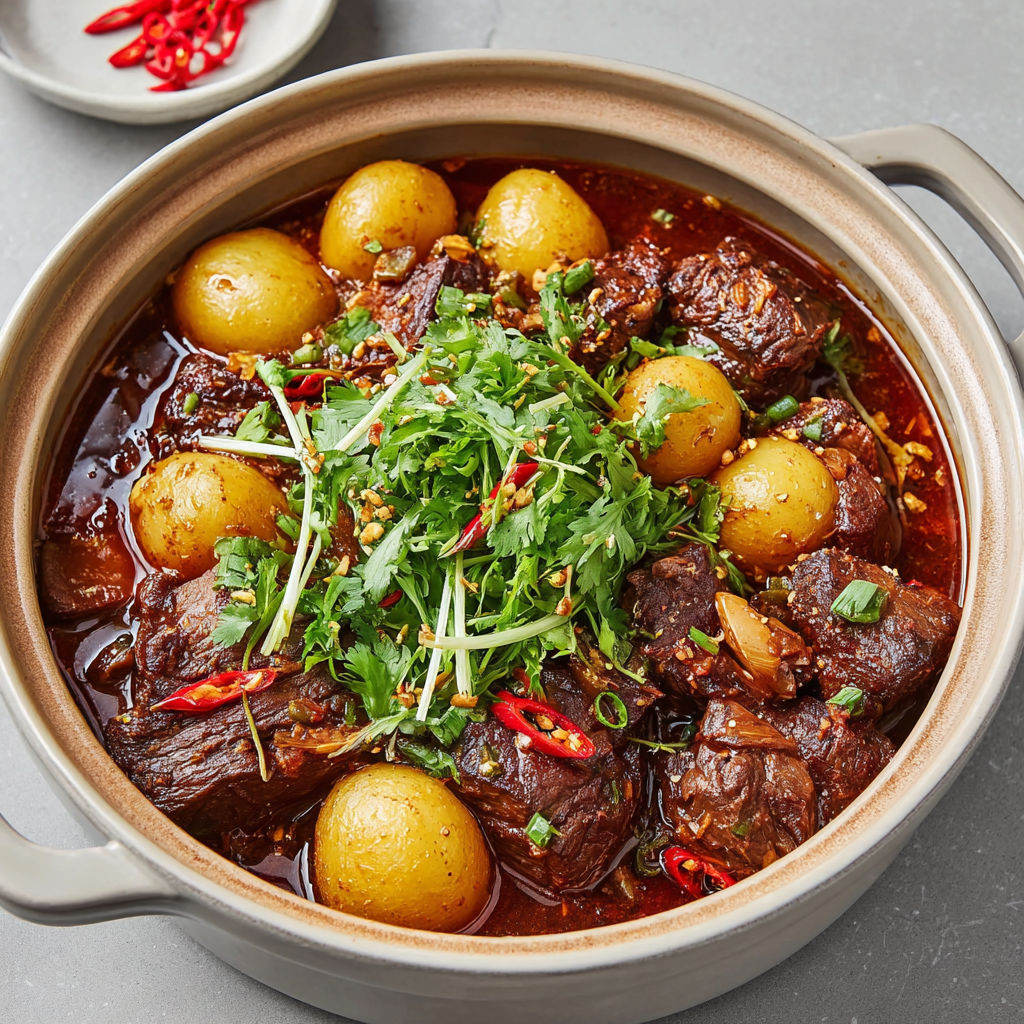
My favorite part is how the gochujang and onions melt into the sauce Making this always brings me back to our last family winter gathering when we all piled into the kitchen for spontaneous taste tests from the simmering pot
Storage Tips
Let leftovers cool to room temperature then refrigerate in a sealed container for up to four days The beef continues to absorb the sauce making it even more flavorful with time For longer keeping freeze in portioned containers for up to three months Thaw overnight in the fridge
Ingredient Substitutions
If you cannot find gochujang you can blend miso and sriracha as a stand in though the depth will be different Coconut aminos work beautifully for a gluten free soy sauce replacement Pork shoulder can be used in place of beef chuck for a lighter but equally rich option
Serving Suggestions
This dish is a knockout as a rice bowl Top with quick pickled cucumbers or scallions for extra crunch If serving guests pair with steamed bok choy or blistered shishito peppers For a fun Korean fusion experience try wrapping the beef and rice in lettuce leaves
Cultural Context
This recipe marries classic American pot roast technique with iconic Korean flavors Traditionally gochujang is a beloved pantry staple in Korean cooking prized for its savory spice I love how this approach creates a bridge between comfort food from two different kitchens
Seasonal Adaptations
In warmer months serve the pot roast chilled or at room temperature with a tangle of cool cucumber salad For winter buffets keep it hot in a slow cooker or Instant Pot for easy entertaining Brighten the sauce with fresh lime juice or sliced red chiles when tomatoes are in season
Success Stories
A friend prepped this pot roast as a freezer meal before her new baby arrived and claimed it was the highlight of every postpartum dinner My own family loves how leftovers turn into epic sandwiches for lunch
Freezer Meal Conversion
To freeze prepare up to the baking step then transfer everything to a large freezer bag Squeeze out air and freeze flat Thaw in the refrigerator overnight and finish baking as usual If short on time cook directly from frozen with an extra hour in the oven
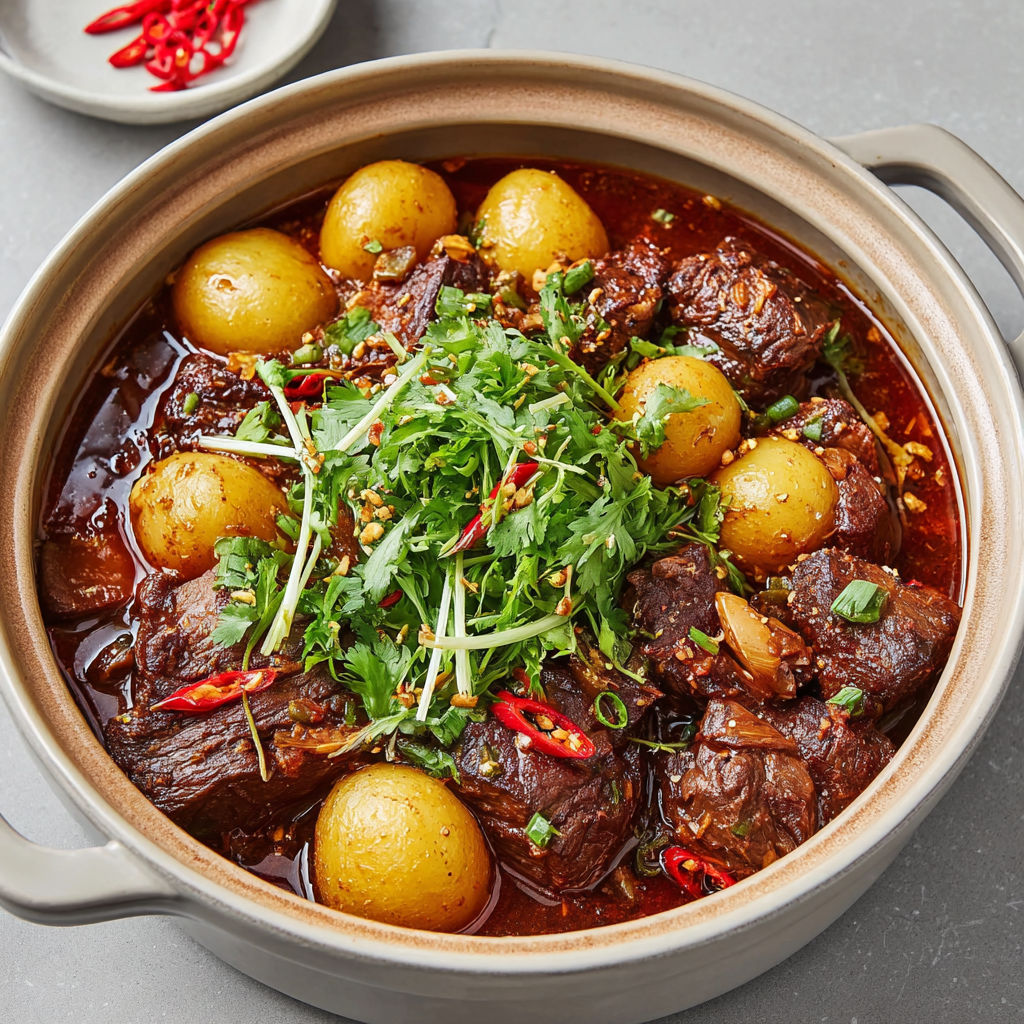
This pot roast is a celebration of Korean and American comfort food Enjoy it family style or freeze portions for future feasts.
Common Recipe Questions
- → What cut of beef works best?
Beef chuck roast is ideal thanks to its marbled texture, which becomes tender and flavorful when slow-braised.
- → Can I use a slow cooker instead of the oven?
Yes, after browning the beef and sautéing aromatics, transfer everything to a slow cooker and cook on low for 8 hours.
- → Is gochujang necessary?
Gochujang adds signature Korean depth and heat, but for a milder version, you can reduce the amount or substitute with miso paste and a dash of chili flakes.
- → What sides complement this dish?
Steamed rice, fresh cilantro, and kimchi are classic accompaniments that balance robust flavors and spice.
- → How should leftovers be stored?
Allow the dish to cool, then keep in an airtight container in the refrigerator for up to 3 days. Reheat gently before serving.