
 Save
Save
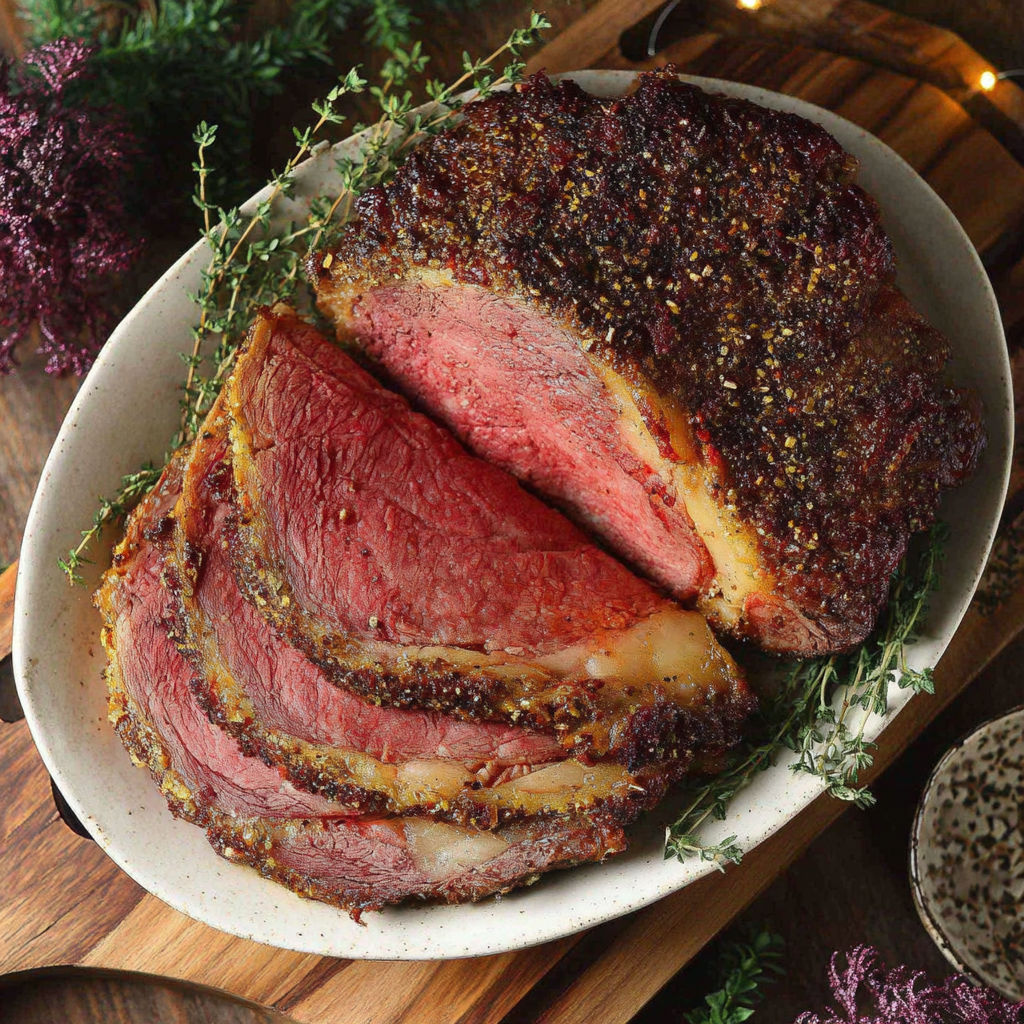
A prime rib roast scented with garlic and fresh herbs has become the centerpiece of my family's gatherings, guaranteed to deliver rich flavor and an irresistible crust every time. The fragrant butter rub infuses every bite, while roasting low and slow ensures perfect juiciness. Topped with a silky homemade gravy, this roast turns any meal into a celebration and just the aroma alone gets everyone gathered in the kitchen.
The first time I roasted a prime rib like this I was nervous about overcooking it but I learned that low and slow is almost foolproof and now everyone asks me to make this for birthdays and holidays.
Ingredients
- Salted butter: softened brings richness and helps herbs stick evenly use best quality butter you can find
- Garlic cloves: fresh garlic gives a sharp kick and deep flavor avoid pre-minced for best results
- Fresh rosemary and thyme: chopped both add earthy piney notes look for firm sprigs not wilted
- Fresh parsley: for brightness opt for flat-leaf which is more flavorful than curly
- Dijon mustard: lends depth and tanginess use traditional Dijon not yellow mustard
- Worcestershire sauce: adds savory umami store in a cool dark place to keep fresh
- Kosher salt: for seasoning use generous coarse flakes for most even salting
- Pepper: freshly ground makes the flavors pop try to grind just before using
- Bone-in prime rib roast: the star select one with even marbling and deep color
- Flour: helps thicken the gravy use all-purpose for reliable results
- Beef broth: forms the gravy base low sodium gives more control over seasoning
Instructions
- Make the Herb Butter:
- Add softened butter to a small bowl. Finely mince garlic rosemary thyme and parsley then mix these with the butter Dijon mustard Worcestershire salt and pepper. Mash together with a fork until evenly combined. The butter should be very spreadable and flecked with herbs everywhere.
- Prepare the Rib Roast:
- Remove the rib roast from the fridge and let it come to room temperature for an hour. Trim excess fat if needed but leave a light layer for flavor. Tie the roast with kitchen twine two or three times to help it hold its shape while roasting.
- Apply the Butter Mixture:
- Pat the roast dry with paper towels. Spread the herb butter mixture over the entire top and sides of the roast using your hands or a spatula. Press the butter on so it sticks well and forms an even coating over all exposed meat.
- Arrange in Pan:
- Position the oven rack in the lower third of your oven. Preheat to 250 F. Fit a roasting pan with a rack and place the meat rib-side down on top. This helps air circulate and roasts the beef evenly.
- Roast Low and Slow:
- Roast the prime rib uncovered at 250 F for two and a half to three hours. Insert a meat thermometer into the very center to check for 100 F. This slow start helps the inside cook gently without drying out the surface.
- Finish at High Heat:
- Increase oven temperature to 400 F. Continue roasting until the internal temp reaches 125 F for rare or 135 F for medium. If outside darkens quickly loosely tent foil over the roast to prevent burning.
- Rest Before Carving:
- Remove roast from oven and let it rest on a cutting board for at least 30 minutes. This wait lets juices redistribute for maximally juicy slices.
- Make the Gravy:
- Once roast is off the pan pour off all but about one third cup of the drippings. Set roasting pan over medium high heat on the stove and scrape up any browned bits. Sprinkle flour into the fat and whisk constantly for two to three minutes. Add beef broth a half cup at a time whisking vigorously to avoid lumps. Bring to a boil and cook until thickened. Taste and adjust seasoning.
- Strain and Serve:
- Strain the finished gravy through a fine mesh for the silkiest texture. Remove kitchen string and the bones then slice roast to your liking. Plate with a spoonful of warm gravy.
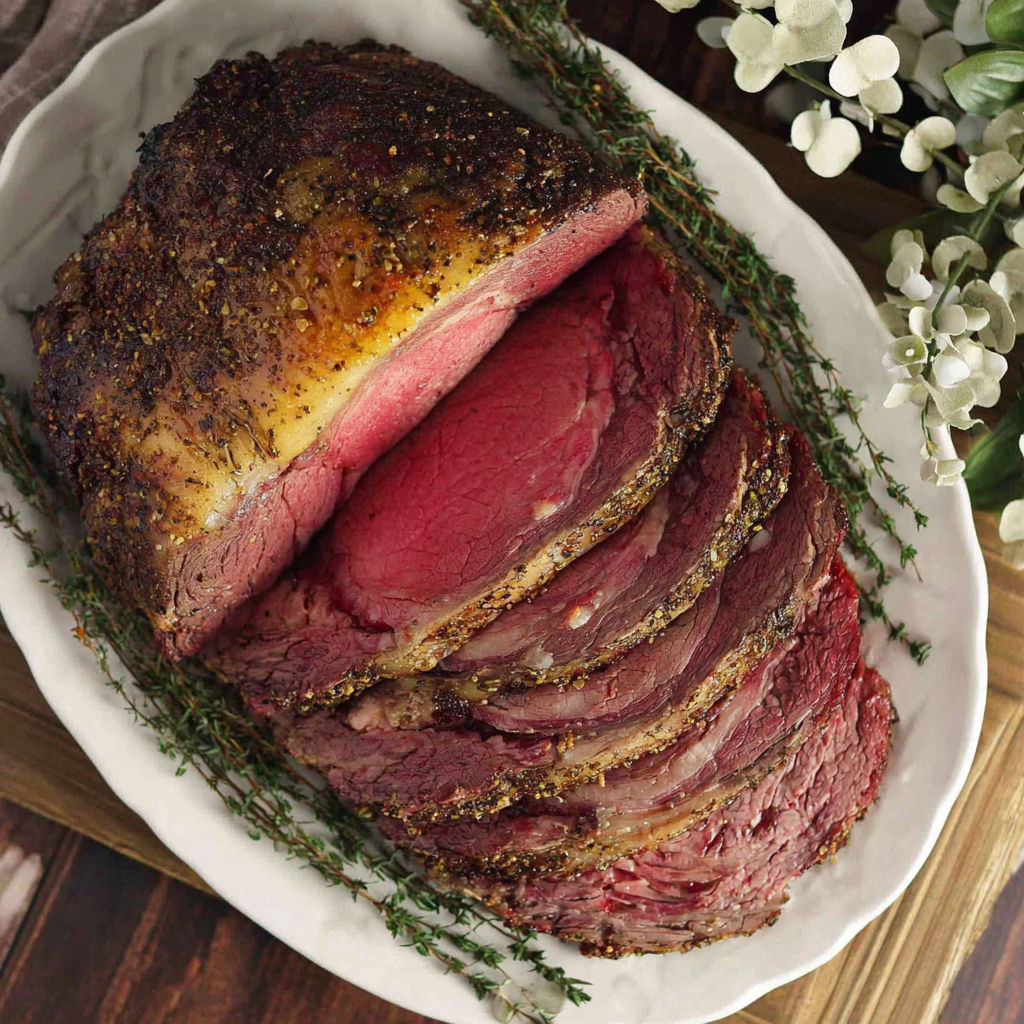
My favorite part of this recipe is when the herb butter sizzles in the pan and perfumes the whole kitchen with rosemary and garlic. My youngest always sneaks into the kitchen to swipe a crunchy end piece as I carve and that crispy bite is a reward for the cook.
Storage Tips
Store leftovers in an airtight container in the fridge for up to five days. For reheating use gentle heat either in a low oven or sliced in a skillet with a bit of leftover gravy so the meat stays tender. The gravy thickens overnight so whisk in a splash of broth to bring it back to silky.
Ingredient Substitutions
If you do not have fresh herbs substitute with dried but use only one third the amount since dried herbs are stronger. Swap in unsalted butter but adjust salt up to one and a half teaspoons. Dried thyme stands in well for fresh.
Serving Suggestions
Prime rib pairs perfectly with classic sides like roasted potatoes steamed green beans or creamed spinach. A fresh green salad with tangy vinaigrette balances the richness. I always serve extra horseradish cream on the side for a sharp contrast.
Cultural and Historical Touch
Prime rib has roots in traditional English Sunday roasts where large joints of beef were served with gravy Yorkshire pudding and root vegetables. This American version with garlic and herbs updates the classic for modern tastes but keeps the celebratory spirit alive.
Seasonal Adaptations
For spring try swapping some parsley for fresh chives or tarragon for extra brightness. In summer add grated lemon zest to the butter. In winter blend in a pinch of smoked paprika for extra depth. Prime rib roast is always a showstopper but do not save it just for holidays. The slow roast method makes it easy enough for anytime you want a luxurious home cooked meal.
Success Stories
I made this roast for my parents' anniversary and everyone raved about how juicy and flavorful it was. Even family members who usually shy away from red meat could not resist a second slice. The little leftovers made the best steak sandwiches the next day.
Freezer Meal Conversion
After roasting and chilling tightly wrap leftover slices and freeze with a little gravy in freezer bags. Thaw overnight in the fridge and gently reheat with a splash of beef broth over low heat for a dinner just as good the second time around.
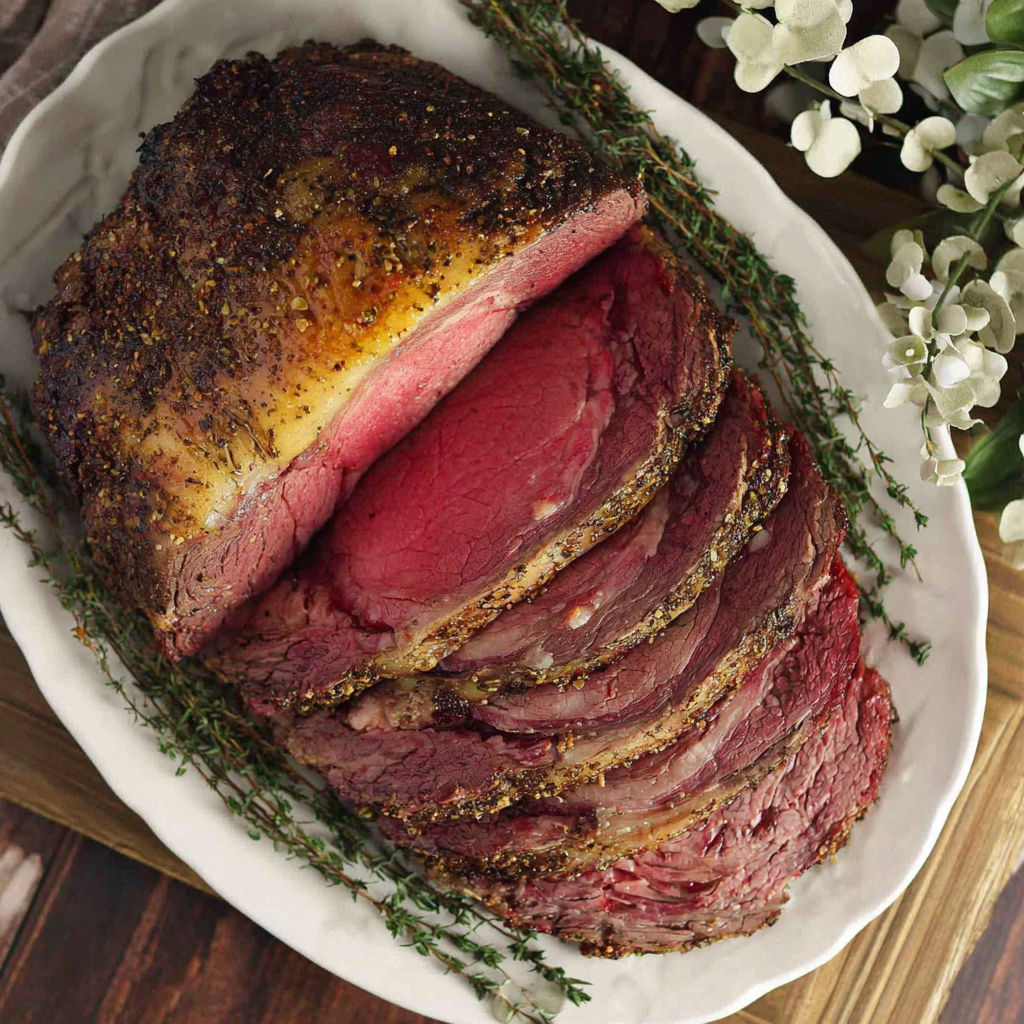
This prime rib roast is elegant but entirely approachable and sure to impress at any gathering. With simple steps and classic flavors, it is a centerpiece you will want to make again and again.
Common Recipe Questions
- → How do I achieve a flavorful garlic-herb crust?
Mix softened butter with minced garlic, rosemary, parsley, Dijon, Worcestershire, salt, and pepper, then evenly coat the roast before roasting.
- → What internal temperature should I aim for?
For rare, roast to 125°F; for medium, 135°F. Always let the meat rest after roasting for best texture.
- → Can I use dried herbs if I don't have fresh?
Yes, substitute 2 teaspoons each of dried rosemary and thyme for the fresh herbs if needed.
- → How is the beef pan gravy made?
Whisk flour into the pan drippings, then gradually add beef broth, stirring constantly until thick and smooth.
- → What's the best method for carving the roast?
Remove strings, place the bones down, cut along the bones to separate, then slice the meat to desired thickness.
- → Should I bring the meat to room temperature before roasting?
Yes, let the roast sit out for about an hour to ensure even cooking in the oven.