
 Save
Save
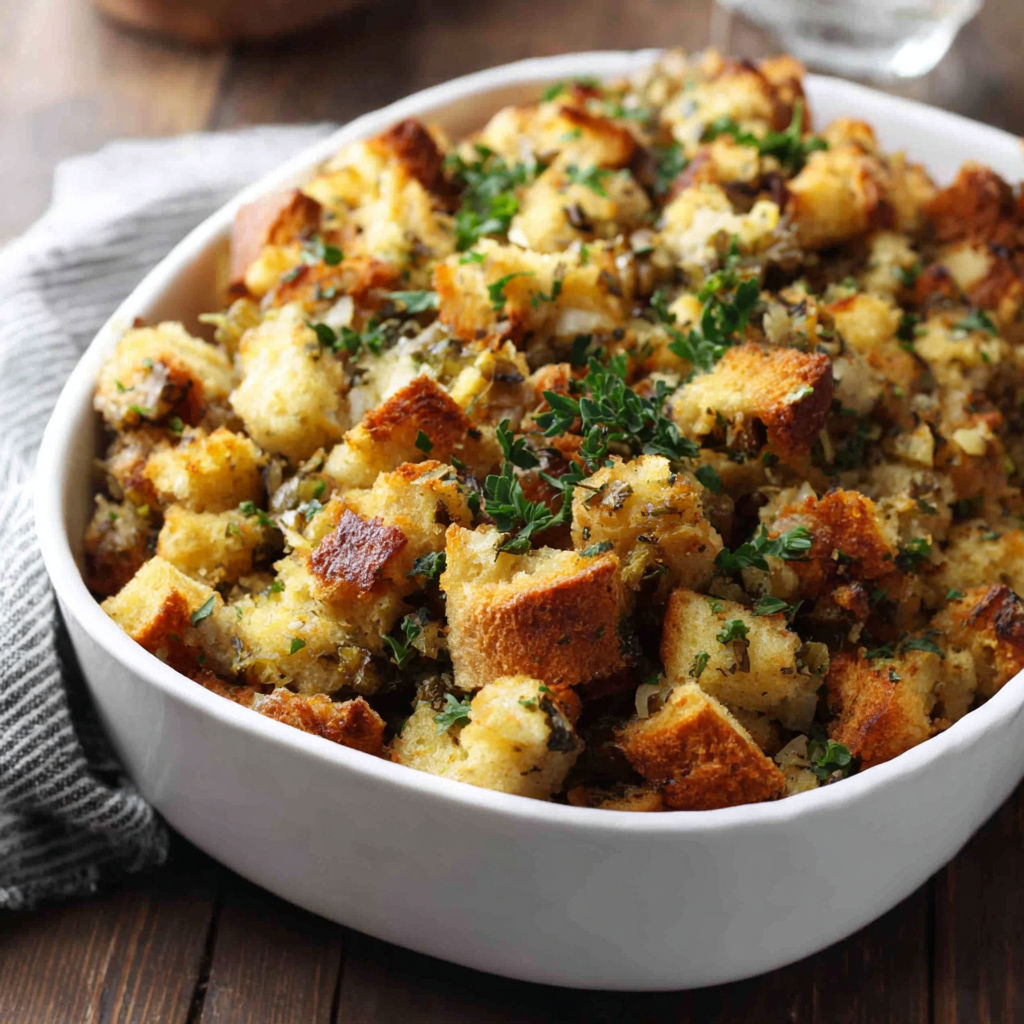
This traditional Thanksgiving stuffing fills the kitchen with comforting aromas while baking and brings everyone to the table. The classic blend of tender bread, sweet cooked vegetables, and fresh herbs makes it both cozy and celebratory. Crisp on top and moist beneath, this is the stuffing that makes my family’s holiday meal complete year after year.
I began perfecting this stuffing when my grandma passed her recipe to me and since then it is the must-have dish each Thanksgiving. Even picky eaters pile it high year after year.
Ingredients
- Sourdough or French bread: choose a firm loaf for rich flavor and structure cut into cubes and let dry for best texture
- Onion: large and finely diced for a gentle sweetness and depth select a fresh heavy onion with no sprouting
- Celery: brings a delicate crunch and freshness look for crisp pale green stalks free from blemishes
- Fresh sage, thyme, and rosemary: these classic herbs add signature Thanksgiving fragrance and warmth use fresh if possible and chop finely for even flavor throughout
- Low sodium broth (chicken or vegetable): to cook the bread without making it too salty warm it before mixing in to help everything blend
- Unsalted butter: melted for richness and golden color choose real butter for authentic taste
- Salt and pepper: for seasoning always grind your own pepper and salt just before adding
Instructions
- Prepare Ingredients:
- Cube the bread into uniform pieces then spread them out to dry overnight or toast them lightly on a baking sheet in a low oven until crisp and dry to the touch. Chop the onion, celery, and all fresh herbs as fine as possible for even texture.
- Sauté Vegetables:
- Melt the butter in a large skillet over medium heat. Add the diced onion and celery, cooking gently and stirring often for about five to seven minutes until the vegetables are softened but not browned. Sprinkle with a little salt and pepper as they cook for extra depth.
- Combine Ingredients:
- Place the prepared bread cubes in a large mixing bowl. Pour the warm sautéed vegetables and butter over the bread evenly for even soaking. Add all chopped herbs and season again with salt and fresh pepper. Gradually pour in warm broth, stirring and pausing so each addition is absorbed. Mix until every cube is well moistened but not soggy.
- Bake:
- Spread the mixture into a greased baking dish of at least three quarts so the stuffing bakes up crispy on top but stays soft underneath. Cover tightly with aluminum foil and bake at 350 degrees Fahrenheit for thirty minutes to trap in moisture. Remove the foil and return the stuffing to the oven for about fifteen minutes until the top is golden and crisp and the edges sizzle.
- Serve:
- Allow the stuffing to cool for a few minutes before serving to help it set and slice neatly. Serve alongside roast turkey or your favorite holiday mains and enjoy each herby bite.
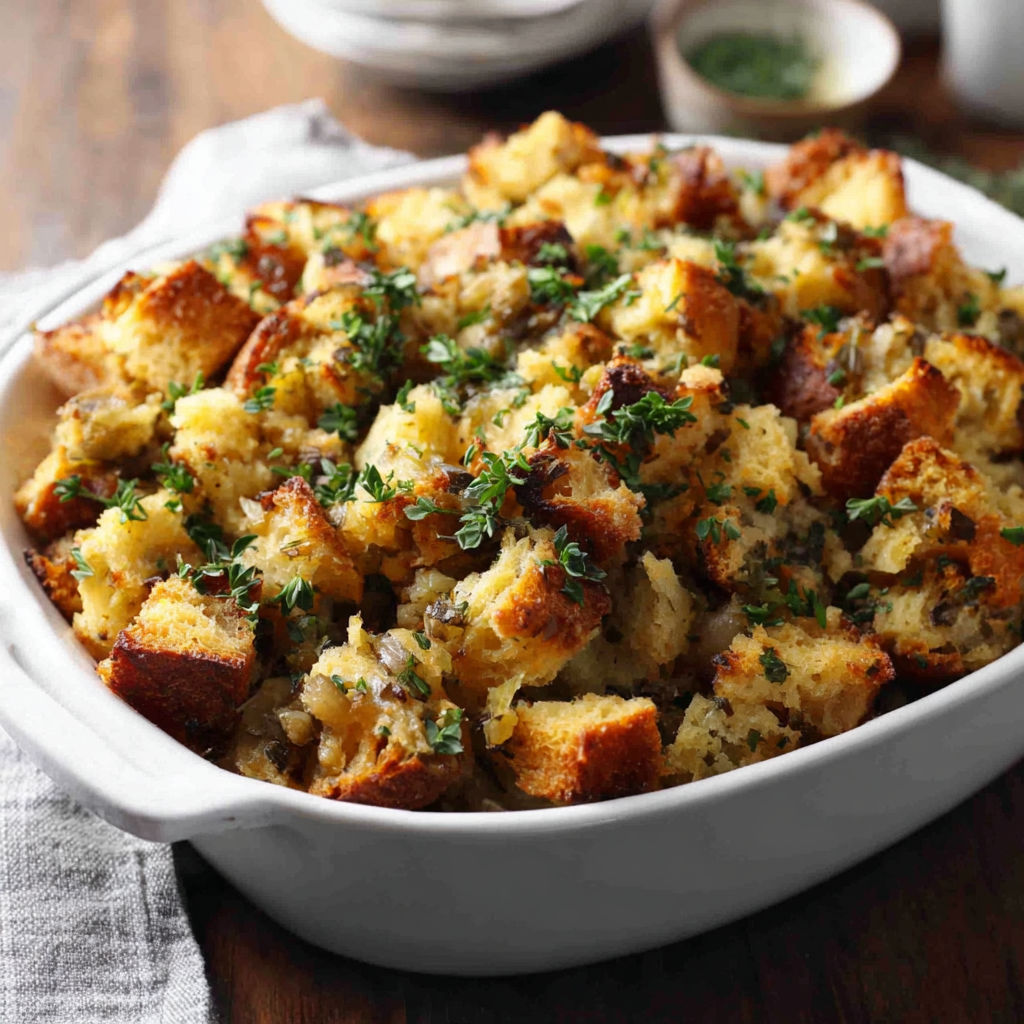
My favorite ingredient is always the aromatic fresh sage which fills the kitchen with cozy woodland fragrance. The recipe reminds me deeply of my grandma who would let me taste test the stuffing before it even reached the oven and we both called it the best part of the meal.
Storage Tips
Transfer leftover stuffing to an airtight container as soon as it cools to room temperature. Refrigerate for up to three days and reheat covered with a splash of broth in the oven or microwave to revive moisture.
Ingredient Substitutions
If you only have sandwich bread that works in a pinch but let it dry extra long for a less mushy result. Dried herbs can work if fresh are not available but use about half as much since dried herbs are more concentrated. For even more flavor add browned sausage or chopped apples when mixing.
Serving Suggestions
Scatter toasted pecans or walnuts on top of the baked stuffing for a nutty crunch. Or set a bowl of dried cranberries at the table for guests to sprinkle over their serving. A drizzle of turkey pan juices or gravy is always welcome.
Cultural and Historical Context
Bread-based stuffing is a centuries-old tradition that arrived in early American kitchens with settlers from Europe. Over the generations it evolved from a way to stretch out meat fillings into the star side of the holiday meal in many families.
Seasonal Adaptations
Roast cubes of butternut squash and mix them into the stuffing in fall. Swap in fresh chives or tarragon when spring herbs are abundant. Use hearty whole wheat bread in late autumn for a deeper flavor.
Success Stories
A friend once baked my recipe for her first Thanksgiving as a newlywed and called to say every guest raved and asked for seconds. My son takes leftovers back to college and says it tastes like home.
Freezer Meal Conversion
Prepare the stuffing up to the point of baking, spread into a dish, cover tightly, and freeze. When ready to serve, thaw in the fridge overnight then bake as directed, adding ten extra minutes to the covered time.
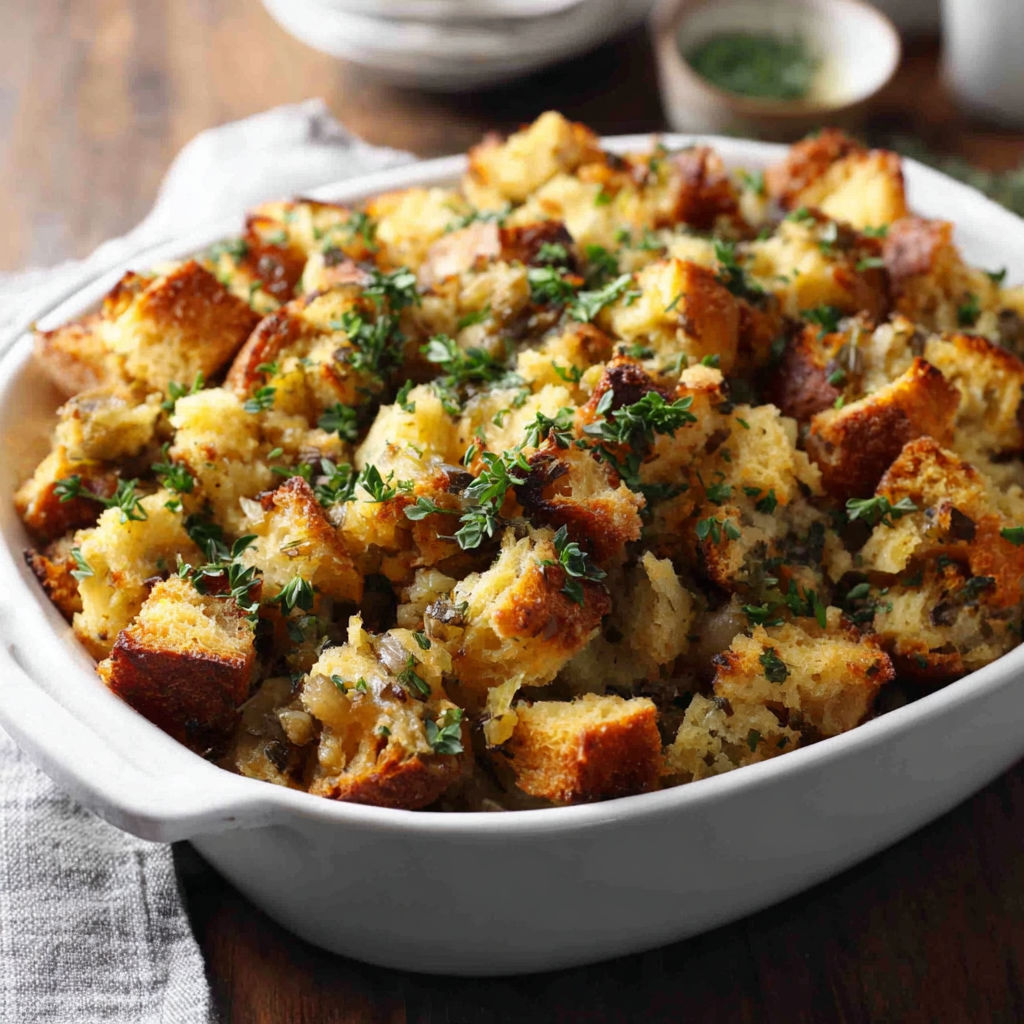
This classic stuffing has a comforting aroma and texture that takes center stage at any holiday meal. Enjoy every herby bite and make it your new family tradition.
Common Recipe Questions
- → Can I use different types of bread?
Yes, sourdough or French bread work best, but you can use other rustic loaves for unique texture and flavor.
- → How do I keep my stuffing from getting too soggy?
Gradually add broth until moistened but not soaked, and bake uncovered at the end for a crisp top.
- → What herbs add the most flavor?
Fresh sage, thyme, and rosemary provide fragrant, savory notes ideal for a classic holiday profile.
- → Can I prepare stuffing ahead of time?
Yes, assemble and store in the refrigerator up to a day ahead. Bake when ready to serve for best texture.
- → What additions make for tasty variations?
Try adding cooked sausage, diced apples, mushrooms, or nuts for additional flavor and texture.
- → How should leftovers be stored?
Store leftover stuffing in an airtight container in the refrigerator for up to three days.