
 Save
Save
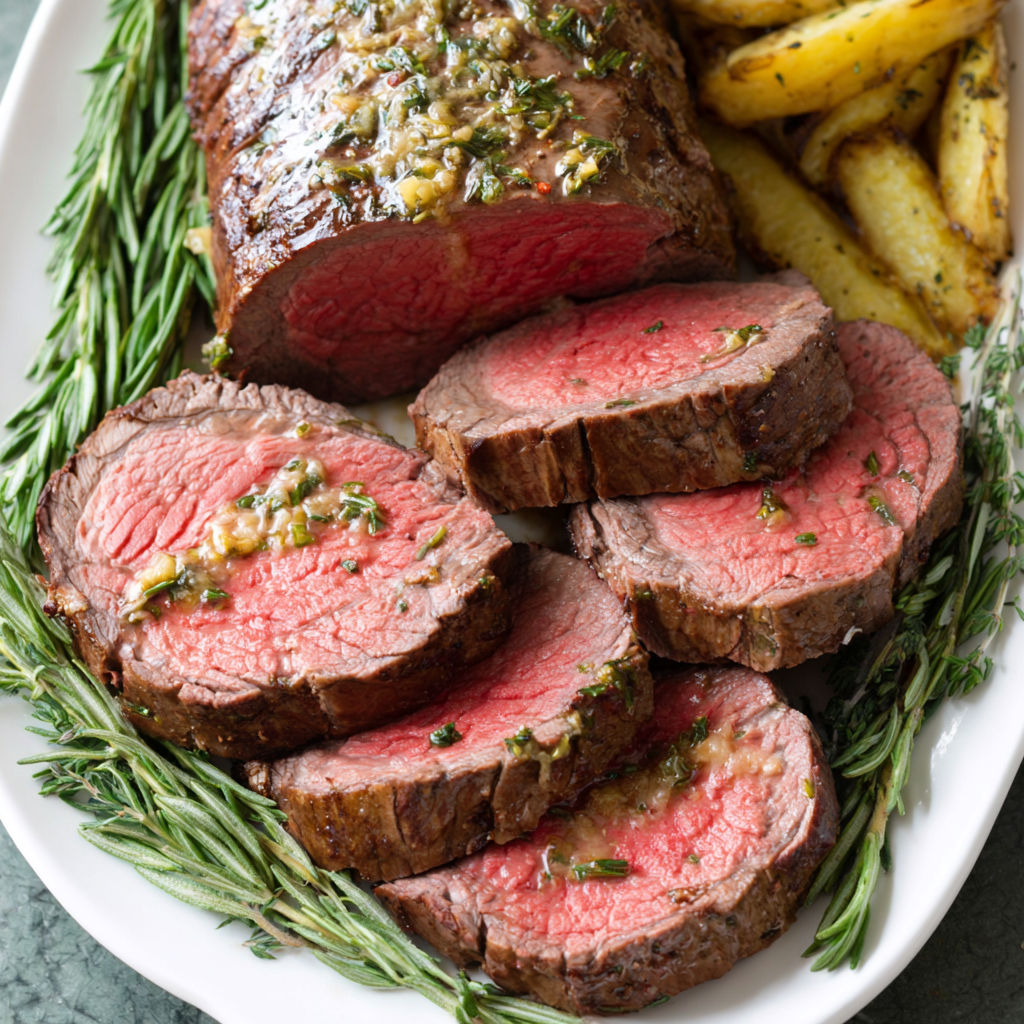
There is nothing quite like serving beef tenderloin for a special occasion dinner. This cut is famous for its buttery tenderness and subtle flavor. Here, it is slow-roasted then quickly seared to develop the perfect crust, finished with a garlicky butter bath infused with fresh thyme and rosemary. The result is a centerpiece roast that impresses every time and never fails to please a crowd.
I always make this for family gatherings and my guests are thrilled every time. Last year my brother-in-law asked for thirds and the platter was wiped clean by the end of the night.
Ingredients
- Beef tenderloin: about five pounds makes a striking centerpiece buy from a reputable butcher and look for even marbling
- Kosher salt and black pepper: these keep things classic and let the beef flavor shine use flaky salt if you have it
- Vegetable oil: helps build the sear at high temperatures a neutral oil is best
- Unsalted butter: adds richness and flavor to the sauce choose a high-quality butter for the best taste
- Fresh thyme: brings vibrant herbal aroma pluck leaves right before using for maximum freshness
- Fresh rosemary: infuses deep woodsy tones buy sprigs that look freshly cut with no browning
- Garlic cloves: smash for easy peeling and bold flavor add extra if you love it
Instructions
- Prepare the Tenderloin:
- Halve the beef tenderloin into two equal pieces. Use kitchen twine to tie each roast snugly every inch and tuck any thin end underneath to create even thickness. This ensures both portions cook at the same rate.
- Dry Brine the Beef:
- Generously season the whole surface with kosher salt. Place both pieces on a wire rack set over a rimmed baking sheet. Leave uncovered in the fridge for twelve to twenty four hours. This step locks in moisture and lets the seasoning penetrate deeply.
- Roast the Beef:
- When ready to cook remove from the refrigerator. Preheat oven to three hundred degrees. Insert an oven probe thermometer into the center of the smaller roast so you can monitor doneness without opening the oven repeatedly. Bake for approximately one hour to one hour forty minutes depending on the thickness. Aim for one hundred twenty five degrees in the center for medium rare or one hundred thirty degrees for medium. Check the second roast once the first is done.
- Rest the Meat:
- Remove from the oven and let both roasts rest for ten minutes so juices redistribute and the carryover heat finishes the cook.
- Sear for Crust and Make Butter Sauce:
- Heat vegetable oil in a cast iron skillet over medium high. Pat the beef dry with paper towels. Sear each roast for about one to two minutes per side turning so all four sides develop a deep golden crust. When on the last side add the butter smashed garlic thyme and rosemary to the skillet so the aromas release into the hot butter.
- Finish and Serve:
- Move the roasts to a board to rest a few minutes. Let the butter continue to cook in the pan until it browns and the garlic is toasted. Pour this aromatic mixture into a small dish to serve. To serve slice beef into half inch thick slices after removing the twine. Drizzle the warm garlicky butter and herbs over the slices. Season with a little extra salt and pepper if needed.
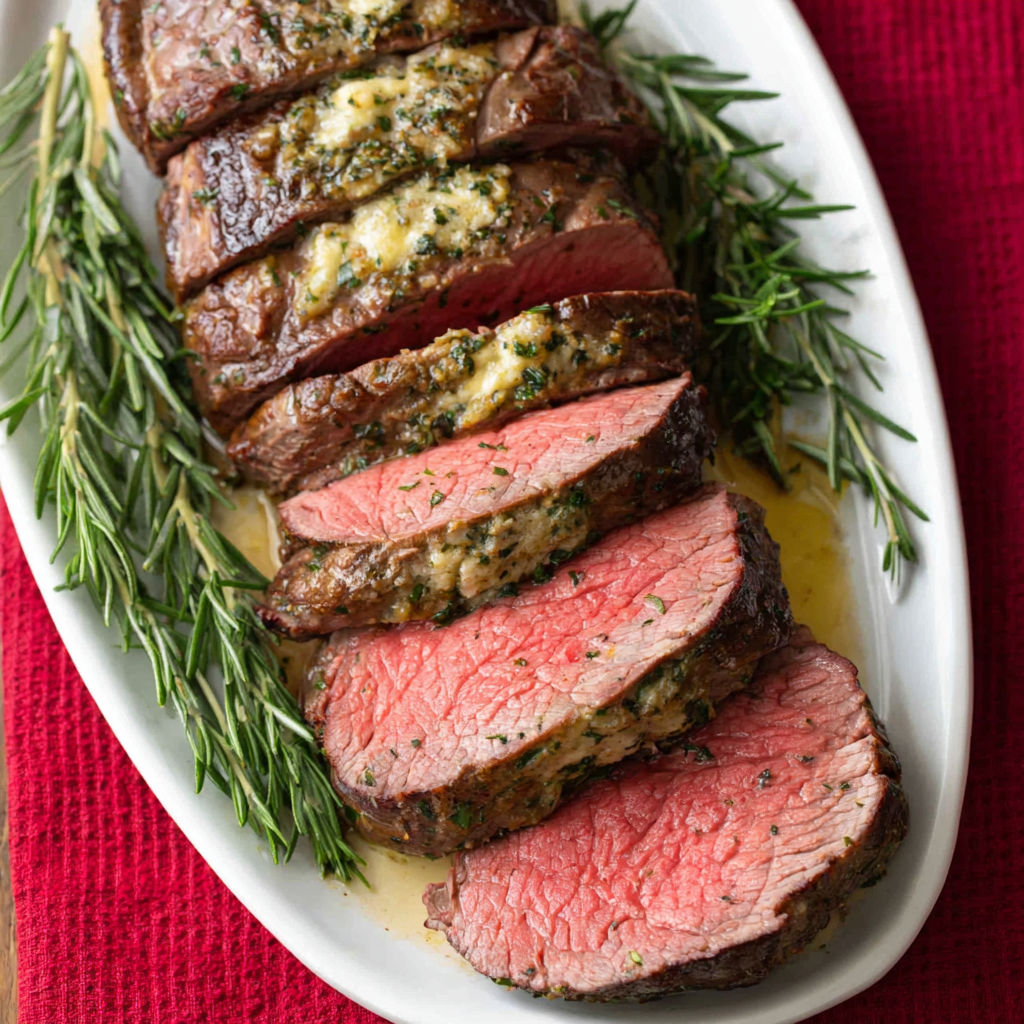
My favorite element is the garlicky butter which soaks into each slice. The first time I made this my grandmother shared stories of her own family holiday roasts as we gathered around the table. The scent of rosemary always brings me right back to that memory.
Storage Tips
Refrigerate leftover beef wrapped tightly in foil or in a shallow airtight container. It will keep three to four days. For longer storage slice the meat and freeze with a bit of the flavored butter in between layers to preserve juiciness. Thaw gently overnight before reheating.
Ingredient Substitutions
If you cannot find fresh thyme or rosemary try a combination of fresh sage and a little tarragon for a unique twist. Grass-fed butter can impart its own delicious flavor. For extra richness a splash of dry red wine in the butter sauce is always welcome.
Serving Suggestions
Pair slices with classic sides like creamy mashed potatoes and roasted vegetables. A fresh green salad balances the richness. Arrange the sliced tenderloin on a platter and spoon the herb butter over the top so your guests can see and smell every fragrant detail.
Cultural and Historical Context
Beef tenderloin has long been the cut of choice for special occasions. Its mild flavor and naturally soft texture made it a favorite at formal dinners for centuries. In the United States it often appears at Christmas or New Year’s celebrations as a centerpiece dish.
Seasonal Adaptations
In the winter amplify comfort by pairing with root vegetables and red wine. Spring versions welcome lighter sides like asparagus or a lemony potato salad. Summer calls for serving at room temperature with tomato salad and crusty bread.
Success Stories
At my last holiday dinner everyone agreed this was the best beef tenderloin they ever had. We laughed around the table long after dessert with everyone sneaking just one more slice. Even the pickiest eaters finished every bite.
Freezer Meal Conversion
To freeze slice the cooled tenderloin and lay slices in a single layer on a baking sheet. Once solid transfer to freezer bags and tuck in a few cubes of the herb butter. These can be thawed individually and gently reheated for elegant weeknight meals later.
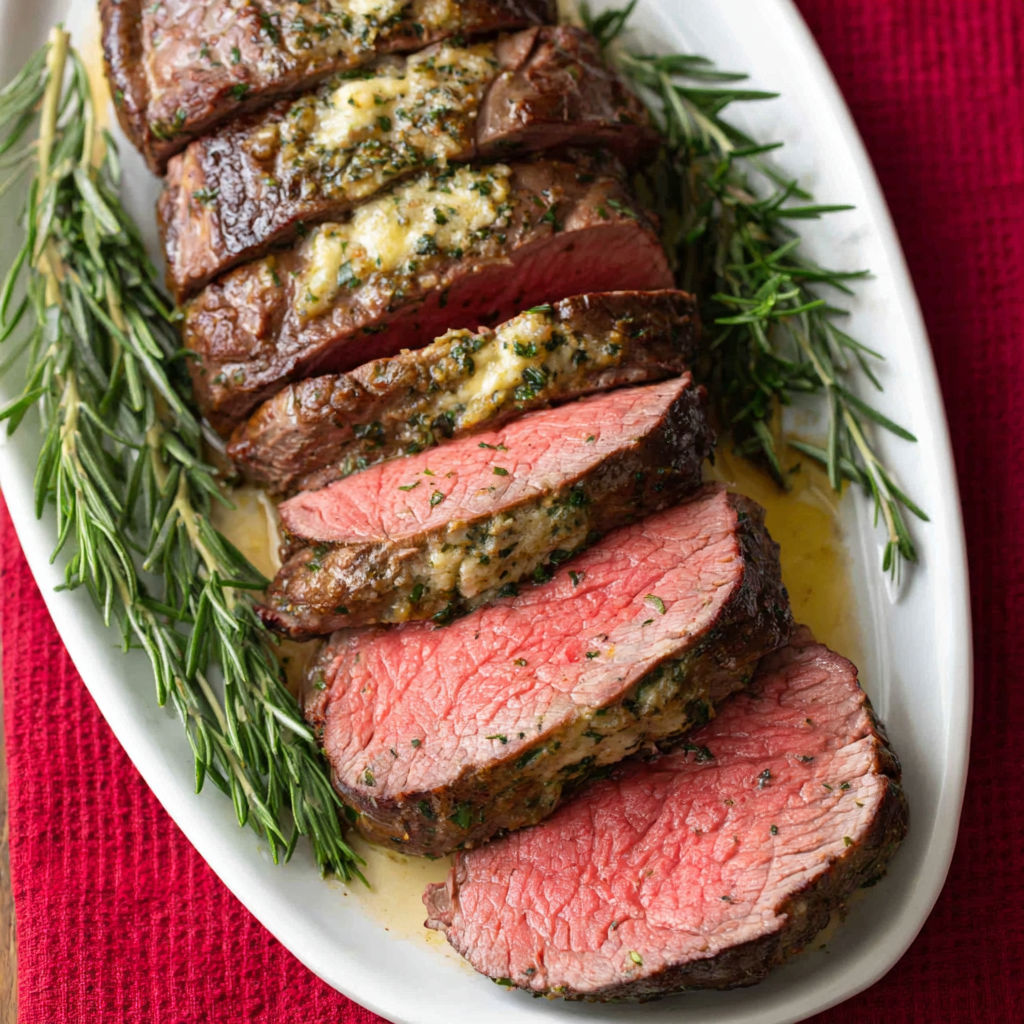
Always pat the beef completely dry before searing for the best crust I learned this after my first time when the crust did not form as beautifully.
Common Recipe Questions
- → Why should beef tenderloin be tied before roasting?
Tying creates a uniform thickness, so the whole piece cooks evenly and holds its shape during roasting.
- → Why is it important to rest the beef before baking?
Resting, especially overnight, lets salt penetrate and helps the surface dry, improving tenderness and browning.
- → What is reverse searing and why use it?
Reverse searing involves slow-roasting first, then finishing in a hot skillet to achieve both tenderness and a flavorful crust.
- → How does garlic butter enhance the beef?
The butter, infused with garlic and herbs, adds depth and a rich, aromatic finish to each slice of tenderloin.
- → How do you achieve medium-rare doneness?
Use an oven thermometer and roast until the center reaches 125°F, then finish with a quick sear and rest before slicing.