
 Save
Save
Garlic Shrimp Mofongo brings Puerto Rican comfort right to your kitchen. You get crispy but tender mashed plantains topped with garlicky pan-seared shrimp and a savory drizzle of pan juices. This is the kind of dish that warms you from the inside out and looks way fancier than the effort it takes. Great for treating yourself or sharing with family.
Every time I cook this, I am reminded of Sunday gatherings at my neighbor’s house where mofongo was always the centerpiece. The hands-on plantain mashing brings everyone into the kitchen.
Ingredients
- Green or slightly yellow plantains: Provide structure and that signature mofongo texture. Choose ones that feel heavy and firm.
- Fresh garlic: Boosts the savory punch. Go for plump, tight-skinned cloves.
- Olive oil or butter: For richness and smooth mashing. Good quality olive oil makes a difference.
- Pork cracklings: Give a salty crisp dimension. Ask for chicharrón at a Latin market or skip for a vegetarian version.
- Salt and pepper: Bring out the flavors. Use sea salt if you have it.
- Medium shrimp: Are the heart of the topping. Look for peeled and deveined shrimp that smell fresh.
- Butter or olive oil (for shrimp): In the pan gives shrimp that glossy finish. Use butter for creaminess, olive oil for a bit more peppery bite.
- Paprika or cilantro: Brings freshness and contrast. Optional but they add color and a burst of flavor.
- Lime wedges and sautéed vegetables or Puerto Rican rice and beans: Are perfect on the side. For a well-rounded meal, I like cutting a few limes and prepping a quick salad.
Instructions
- Prepare Plantains:
- Cut off the ends and score the peel. Then use your thumbs or a spoon to peel away the thick skin and chop into big rounds. Boil in salted water for up to 15 minutes until fork-tender. For a deeper flavor, fry them in oil until golden and just cooked through.
- Mash Mofongo:
- Transfer plantain pieces to a sturdy bowl or mortar. Add minced garlic, a drizzle of olive oil, and a handful of pork cracklings if using. Pound and fold until everything has combined and becomes a dense mash. Add more oil or a splash of broth if too dry. Season with salt and pepper to your taste.
- Cook Garlic Shrimp:
- In a wide skillet, heat butter or oil over medium. Add the garlic and let it sizzle until aromatic, about one minute. Scatter the shrimp into the pan in a single layer. Cook for around three minutes per side until they curl and turn pink. Season them well, then spoon them and the garlicky pan juices over your waiting mofongo.
- Assemble Dish:
- Scoop mofongo into bowls or shape it into mounds on plates. Top each with shrimp and ladle pan juices over everything. This keeps the mofongo moist and flavorful.
- Serve:
- Garnish with chopped cilantro or a squeeze of lime. Serve straightaway for the best contrast of flavors and textures.
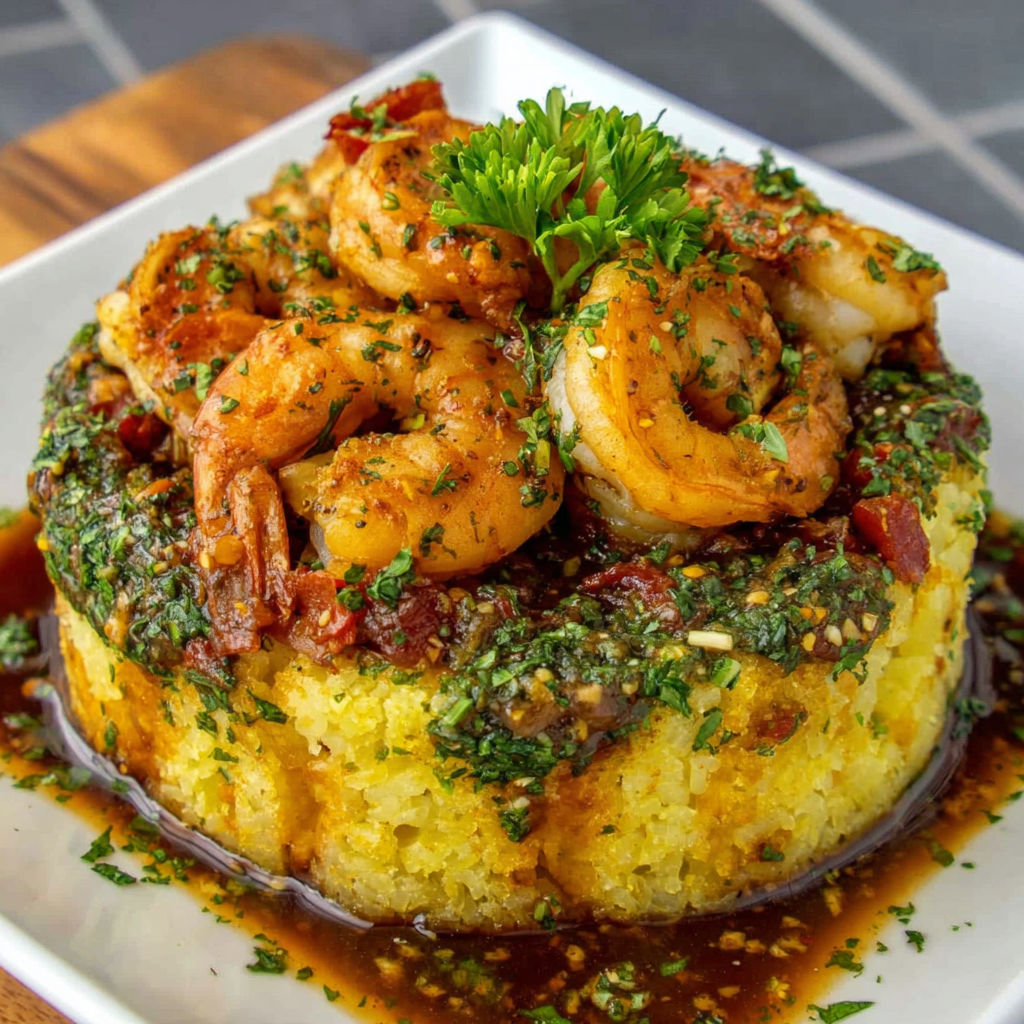
I absolutely love how the garlic perfumes the entire kitchen. As a child I watched my grandmother pound plantains by hand and that tradition makes every batch feel extra meaningful. The chicharrón crunch was always my favorite surprise bite.
Storage Tips
Store leftover mofongo base in a tightly covered container in the fridge for up to two days. Reheat gently before serving. Shrimp tastes best freshly cooked but can be quickly rewarmed in a skillet with a touch of olive oil.
Ingredient Substitutions
You can swap shrimp for sautéed mushrooms or roasted vegetables if you prefer a vegetarian version. Smoked paprika works especially well as a sprinkle for extra depth. If you cannot find chicharrón, a few toasted bread crumbs or roasted nuts add a fun crunch.
Serving Suggestions
Serve this dish with tangy slaw or a mound of Puerto Rican rice and beans. A side of avocado and tomato salad helps balance out the garlicky richness. For special occasions, serve mofongo in small portions as an appetizer.
Cultural Context
Mofongo is rooted in West African traditions brought to Puerto Rico. Its signature mix of plantains and pork became a celebration food in many island towns. The mortar and pestle method connects each cook to generations before and makes this dish deeply communal.
Seasonal Adaptations
Use slightly riper plantains in summer for a sweeter take. Top with roasted fall squash or corn in colder months. Try a fresh herb gremolata instead of cilantro for spring brightness.
Success Stories
Many readers tell me their first attempt at mofongo was a smash hit for Sunday dinner. One friend used coconut oil and shrimp for a Caribbean twist and now swears by it. Do not be surprised if this recipe lands in your regular meal rotation.
Freezer Meal Conversion
Mash and freeze the cooked plantains in portions wrapped tightly in plastic. Thaw and reheat when ready for a fast dinner. Cook shrimp fresh to keep everything bouncy and juicy.
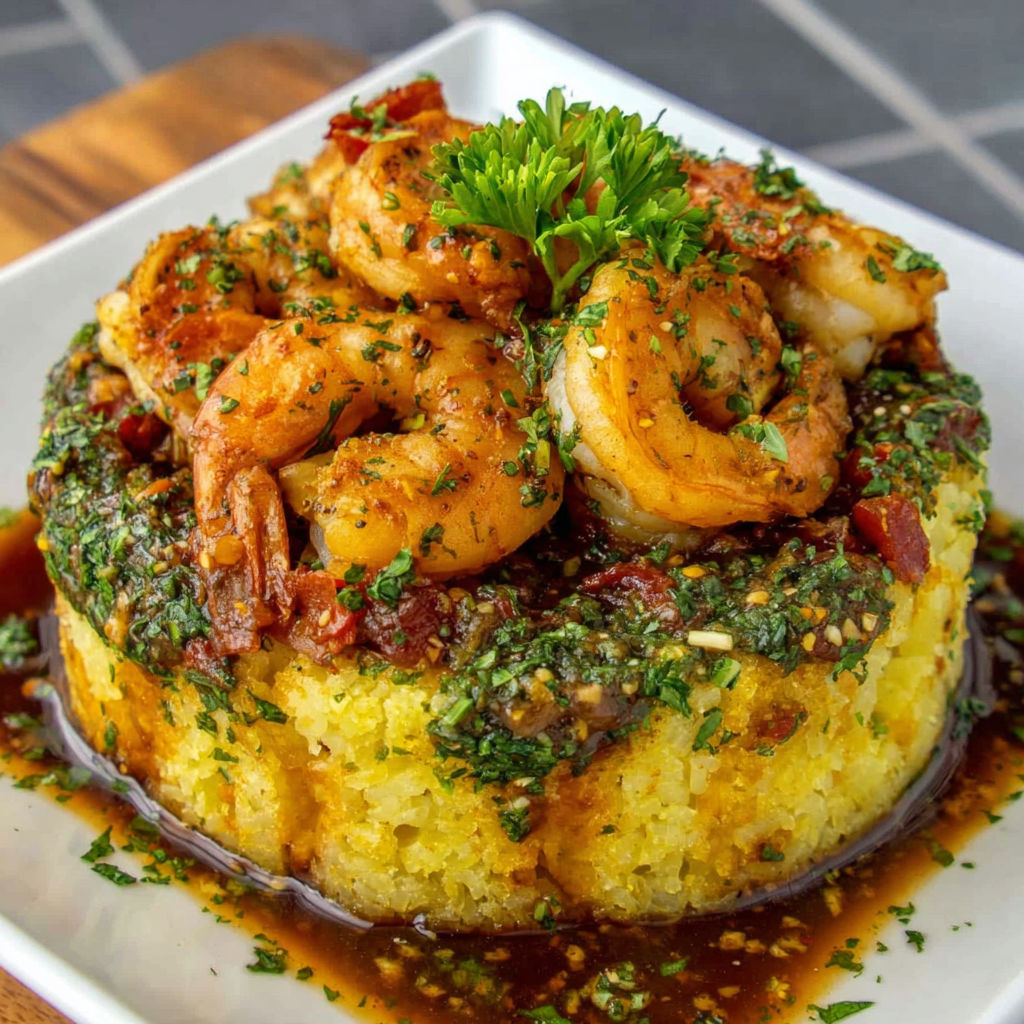
This is one Puerto Rican classic you’ll want to revisit again and again. The bold flavors and heartwarming tradition come together for a meal worth celebrating.
Common Recipe Questions
- → What type of plantains work best for mofongo?
Starchy green plantains deliver the traditional dense and slightly savory texture ideal for classic mofongo. Ripe plantains will be sweeter and softer.
- → Can I make the mofongo ahead of time?
The mashed plantain base can be prepared in advance and stored for up to two days. Cook the shrimp fresh just before serving for best results.
- → What’s a good vegetarian alternative to shrimp?
Try topping the mofongo with sautéed mushrooms or roasted vegetables for a hearty vegetarian variation packed with flavor.
- → Is special equipment required to make mofongo?
Traditionally, a mortar and pestle or pilón is used for mashing the plantains. If unavailable, a sturdy mixing bowl and heavy utensil can work as a substitute.
- → How should Garlic Shrimp Mofongo be served?
Serve immediately after assembly while the plantains are warm and crispy, garnished with cilantro and lime wedges. Excellent with rice and beans or a fresh salad.